There is a reason larch turns up so often on the outside of things. A freshly sawn board shows a warm reddish-gold face with a crisp dark line in every growth ring, and it feels noticeably heavier in the hand than spruce or pine of the same size. Left outdoors, it holds up better than most softwoods grown in Britain, and it does so with very little fuss. Spend an hour understanding the wood's habits — its resin, its movement, and the difference between heart and sap — and you can use larch with confidence for fences, cladding, boats, and the whole grubby business of building things that live outside.
Why larch performs outdoors
Larch is a conifer that breaks the rules. It is deciduous, dropping its needles each autumn, and that slow annual cycle produces timber that is denser and more resinous than the pines and spruces it often grows beside. The heartwood — the darker, central part of the log — carries natural resistance to rot and insect attack, which is what makes the difference outdoors. The paler sapwood around it has almost none.
That distinction matters more than anything else when you are buying. A length of larch with a high proportion of heartwood will outlast a sapwood-rich board by a wide margin in the same position. Look at the end grain: the darker ring should make up most of the width. If the board is mostly pale, treat it as you would treat pine.
Larch is also a wood that moves. It shrinks and swells noticeably as moisture changes, more so than many people expect from a softwood. Design for that from the start, with room to expand and fixings that allow a little give, and you will avoid the split boards and gappy joints that give larch an unfair reputation.
Fencing, gates and agricultural timber
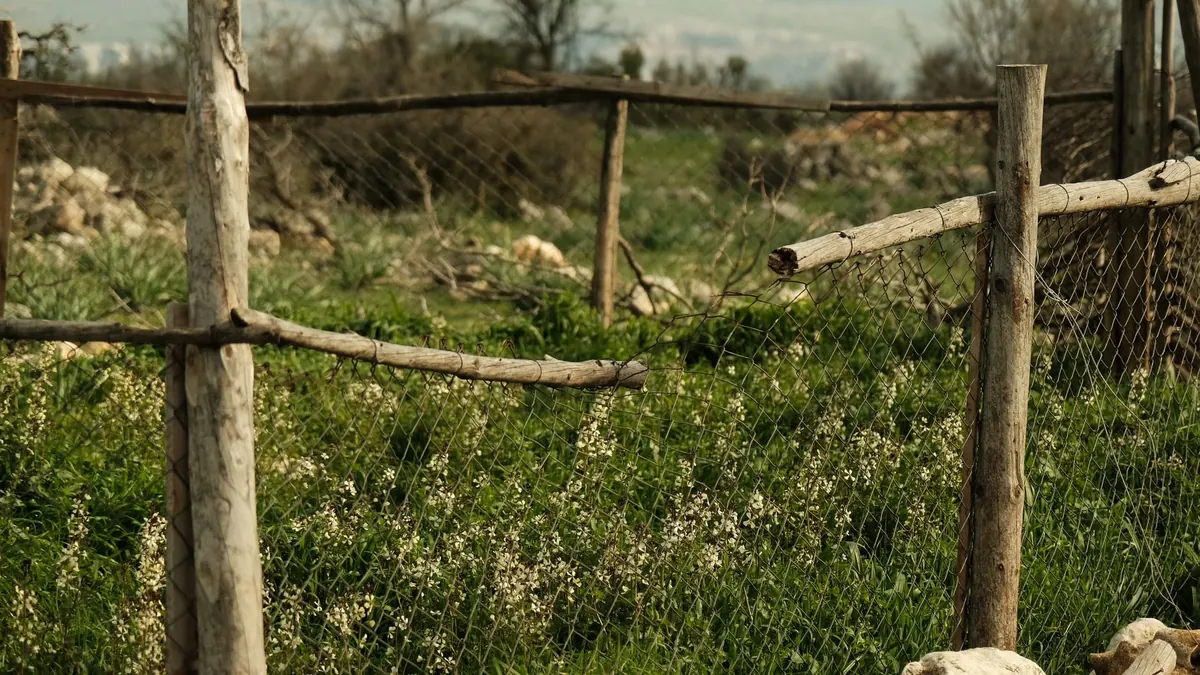
Post and rail fencing is where most UK-grown larch ends up, and for good reason. It saws cleanly, takes a nail without excessive splitting when you pilot the ends, and weathers to an even silver-grey that sits well in a field boundary. Pales, strainers, rails and gate frames are all standard sawmill fare.
The weak point is always ground contact. Even good larch heartwood is only moderately durable, and no timber enjoys sitting in wet soil. Three habits make fence posts last:
- Specify pressure-treated larch, or heartwood-rich material, for anything going into the ground.
- Backfill with compacted spoil or gravel rather than a collar of concrete, which can hold water against the post.
- Protect the ground-line section with a sleeve or a brush-applied bituminous coating, and cut the top of the post at a slight slope so rain runs off.
Above ground, untreated larch is perfectly at home. If you want to keep the warm colour rather than let it silver, a breathable exterior stain applied to dry timber will hold it for a few years before it needs refreshing.
Cladding, sheds and garden buildings
Larch cladding has become a staple of British garden rooms, workshops and house extensions, and it earns its place. It is stable enough for vertical boards, holds a shadow line beautifully, and can be left bare to weather or finished to keep its tone.
Feather edge, shiplap, board-on-board and waney edge all work. The details that decide whether the wall looks good in ten years are the ones behind the boards: a drained and ventilated cavity, a breather membrane, and a clear air gap so the back face can dry. Keep the bottom edge of the cladding at least 150mm above ground and open to the air.
Two larch-specific points are worth remembering. First, resin can bleed from knots and warm south-facing boards, so avoid light-coloured render or paving directly below a new larch wall, and expect a little weeping in the first hot summer. Second, use stainless steel or hot-dip galvanised fixings. Bare steel and aluminium in contact with damp larch will stain and corrode.
Finishing choices
Left alone, larch goes grey within a season or two — an even, undemanding grey that many people want. If you prefer the original colour, use a translucent exterior stain with UV protection rather than a film-forming varnish, which will crack and trap moisture. Never seal both faces of a board.
Boatbuilding and marine work
Larch has a long history in working boats around Britain and the Baltic. It was used for planking, frames, deck beams, engine beds and rudders, valued for being tough, resinous and available in usable lengths from home-grown woods. In clinker-built craft and traditional fishing boats, it was often the practical choice when oak was scarce or too heavy for the job.
It is not a simple substitute for oak. Larch splits along the grain more readily, moves a good deal as it dries, and demands careful fastening. Traditional boatbuilding also relied on planking swelling tight once afloat, which means a larch-hulled boat that has dried out on a hardstanding will show gaps until it takes up again.
Restoration work and small craft still use larch for structural timbers, interior joinery and deck structures, but anything load-bearing below the waterline is a job for someone who builds boats for a living. Take advice from a boatbuilder before you cut.
Beyond the boundary: other uses
Once you start looking, larch appears in more places than fences and façades:
- Garden and landscaping: raised beds, planters, edging boards, retaining timbers and pergola posts. Untreated larch is a popular choice for beds where people would rather avoid treated timber.
- Decking and outdoor furniture: workable, but choose well-dried, heartwood-rich boards and finish them, because larch decking can split and throw splinters if it is allowed to cycle wet and dry.
- Internal joinery and flooring: rustic floorboards, ceiling boards, stair treads and door frames, provided the timber is properly dried and the space is not excessively dry.
- Turnery and small workshop projects: tool handles, knobs and toys, where its density and figure are an advantage.
- Firewood and biomass: dense, hot-burning and resinous. Season it for at least a year, and burn it in a closed stove or behind a fireguard — larch spits.
Working with larch: sawing, fixing and finishing
Larch is pleasant to work but it is not passive. Sharp edges matter more than usual, because the resin and dense latewood blunt tools quickly. Slow the feed rate, clear the resin from blades and bits before it sets, and change abrasives more often than you would on pine — warm resin clogs paper in seconds.
Pre-drill near ends and around knots, where splitting starts. For exterior work, use stainless or hot-dip galvanised fixings, and choose a polyurethane or resorcinol adhesive rather than a standard interior PVA. If you are air-drying your own boards, stack them with even spacers in a shaded, well-ventilated spot and give them a full year per inch of thickness before you machine them to final size.
As with any timber, the dust is a respiratory sensitiser. Cut and sand outside or with extraction, and wear a decent mask.
Getting the best from larch timber
Buy on heartwood, dry it properly, and design for movement. Those three things decide how a larch project ages far more than the species name on the invoice. For fencing, cladding and garden structures, ask your sawmill or timber merchant where the larch was grown, how it has been dried, and what proportion of heart you can expect — a good yard will know. Keep end grain sealed, keep timber out of permanent ground contact, fix with stainless or galvanised metal, and larch will reward you with two or three decades of
Photo: Rahime Gül / Pexels