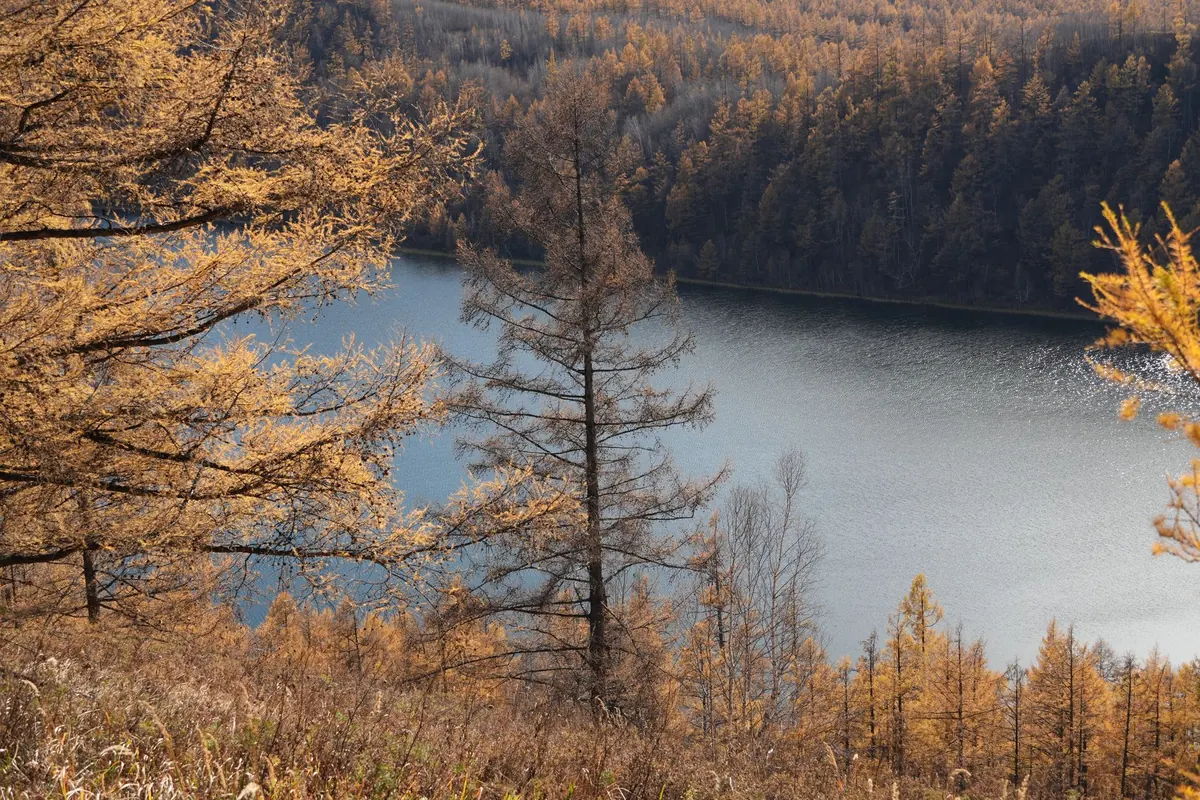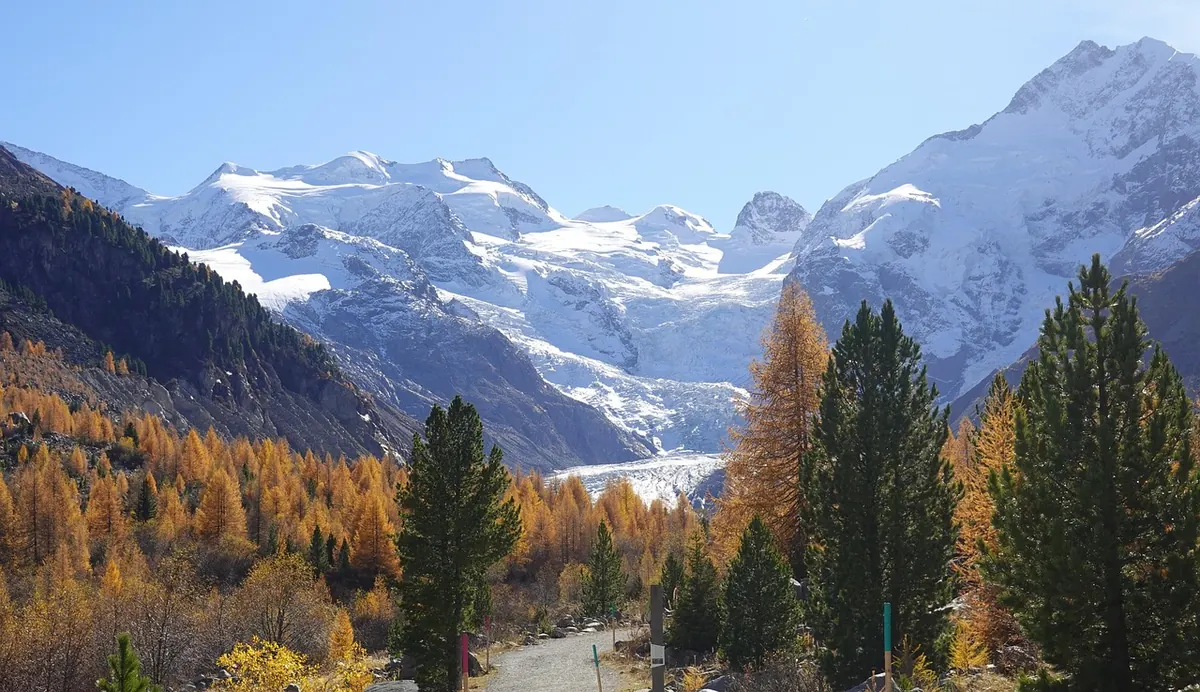
Larch is the conifer that behaves like a broadleaf. It leafs up early, turns butter-gold in late October and then drops every needle, letting winter light reach the ground. For a small wood or a wind-battered shelterbelt, that airy canopy, fast early growth and genuinely useful timber are hard to beat. The catch is that larch is unforgiving in its first two seasons: let grass and rushes smother it, or plant it into a wet, compacted patch, and you will be replacing dead trees for years.
Why larch earns its place
Larch is a pioneer. It wants full light, grows quickly when young, and is content to be overtaken later by oak, beech or birch — which is why it has long been used as a nurse crop in mixed plantings. Its roots go deep enough to make it reasonably wind-firm, and its needle litter is less acidifying than that of many conifers, so the ground beneath it does not sour as quickly.
The timber is dense, with reasonably durable heartwood that suits fencing, cladding and gate rails. Thinnings at 15 to 20 years give you posts and firewood; a well-grown final crop can be worth real money if the stems are straight. Add the spring green and the autumn gold, and a small larch wood is a pleasant place to spend a morning.
Which larch, and where it will grow
Three species matter in Britain, and the differences are worth knowing before you order trees.
European larch (Larix decidua)
The traditional choice, with fine, strong timber. It needs a decent depth of soil and does best on moist but free-draining loams. On mild, damp sites it is the most prone to larch canker, which leaves gnarled, resinous stems.
Japanese larch (Larix kaempferi)
Hardier and faster off the mark, and happy on thinner, poorer, more exposed ground. It is also the species most affected by Phytophthora ramorum, the disease behind large-scale larch felling in wetter western parts of the country — a real consideration if your site faces the Atlantic.
Hybrid larch (Larix × marschlinsii)
The cross between the two, and a common choice in commercial planting. Vigorous, usually straighter, and generally more canker-tolerant than either parent. On reasonable ground, it is often the safest single option.
All three are light-demanding and dislike shallow chalk or heavy clay that sits wet through winter. If the land is boggy, sort the drainage or choose another species.
Spacing and density
Spacing is a trade-off between clean stems and how much thinning you are prepared to do. Close planting shades the ground quickly and produces straighter timber, but it means more trees to thin — and on a small plot that often means hand-cutting.
- 2.5 m × 2.5 m — about 1,600 trees per hectare. A relaxed amenity spacing that suits a small wood mixed with broadleaves, and one you can manage yourself.
- 2 m × 2 m — about 2,500 trees per hectare. The standard forestry compromise, with thinning due from around year 15.
- 1.8 m × 1.8 m — roughly 3,000 trees per hectare. For a timber-led planting on good ground where you intend to thin properly.
- Shelterbelt rows — 1.5 to 2 m between trees and between rows, staggered, in two or three rows. A single row will not hold a strong wind.
As a rule of thumb, order ten per cent more trees than you need for beating up. Mark out rows with canes or a string line so you can still find them when the grass is up.
Site preparation before you buy a tree
Most young larch is lost to competition and wet feet. Deal with both before planting day.
- Knock back the vegetation in the summer beforehand — repeated mowing, or a herbicide applied by someone competent to use it. Long grass and rushes are the main killer.
- Check the drainage. Dig a spade-depth hole in winter. If it fills and stays full, mound, rip, or plant on a raised ridge.
- Cultivate lightly. On compacted or pan-heavy ground, one ripping pass along the contour is enough. Avoid deep cultivation on slopes where you could start erosion.
- Plan access. Leave a ride or two wide enough to drag thinnings out, and keep headlands clear.
- Sort protection. Rabbit spirals or a deer fence, depending on what is browsing the hedge line next door.
Planting and the first three years
Bare-root transplants of 40 to 60 cm are the usual choice. Plant from November to March, whenever the soil is workable and not frozen, and never let the roots dry out — keep bundles wrapped and heeled in if there is a delay.
On grassy ground a notch or T-notch cut with a spade is fast and adequate; on rough, mounded or stony ground, open a proper pit. Firm the soil around the roots with your boot, then give the tree a gentle tug to check it is not loose.
After planting, the priority is a metre-wide circle kept clear of weeds for two or three years. That single job makes more difference than anything else you will do. Walk the wood the following autumn and beat up failures with the same species. Watch for grey squirrel damage, which shows as stripped bark on the stems, and for deer fraying the leading shoots.
Checks worth making first
Larch planting is not always straightforward, so make a phone call before you commit. Phytophthora ramorum has led to felling and to planting restrictions in parts of the UK, and your national forestry authority can tell you whether your site sits in an affected area. New woodland above a certain size — often around two hectares, with different rules in England, Scotland, Wales and Northern Ireland — may need environmental impact assessment approval, and grant schemes are worth exploring. A registered woodland adviser or the relevant forestry authority will give you current advice; if you intend to sell timber later, a felling licence will eventually be required.
Getting started: a simple order of work
- Walk the site in midsummer and again in winter, noting wet patches, exposure and existing wildlife.
- Draw a plan: species, spacing, rides and protection.
- Check approvals, then order from a reputable nursery.
- Prepare the ground the summer before planting.
- Fence or guard, then plant between November and March.
- Weed for three years and beat up failures after the first season.
Do that, and the canopy will close in about a decade — at which point the trees start doing most of the work for you.
Photo: music4life / Pixabay