Larch is the conifer that behaves like a broadleaf. It flushes soft green needles in spring, fattens them through summer, turns them gold in autumn and drops the lot by early winter, leaving a clean open skeleton that lets low sun reach the ground beneath. For UK growers that rhythm is both the appeal and the thing to plan around. Get the timing right and a larch asks almost nothing of you. Get it wrong — pruning in the wrong month, planting into a wet hollow — and the tree will spend years letting you know.
Spring: bud burst and the first flush
Depending on where you are, larch comes into leaf somewhere between mid-March and mid-April. Japanese larch usually goes first, European larch a week or two behind, and the Dunkeld hybrid sits between the two. The new needles are almost lime-green and soft to the touch, carried in dense tufts on short spurs along the twigs. Look closely at the tips of the shoots in April and you may spot the female cones: small, upright and surprisingly red or magenta before they ripen to brown.
Container-grown larch can be planted from March onwards, provided the soil is workable and not waterlogged. Water it in well, stake anything over about 1.5 m, and check the tie each season so it never cuts into the trunk.
Do not prune now. Larch bleeds resin freely from spring cuts and heals slowly, which leaves an opening for infection. A branch snapped by winter gales should be tidied back to a clean edge, but leave deliberate pruning until late summer or winter.
Watch for late frosts. A sharp May frost can nip new growth on exposed sites, but larch normally pushes a second flush and recovers. Resist the urge to cut the blackened tips off.
Summer: growth, water and pests
A young larch on decent, free-draining ground can add 30–60 cm in a season, and the leader keeps extending right through June and July. That vigour is why the tree works so well in shelterbelts and as a loose summer screen.
Watering matters most in the first two summers. One thorough soak a week in dry spells beats a daily sprinkle, because it pulls roots downwards instead of encouraging them to sit near the surface. Once established, a larch on reasonable soil rarely needs watering at all; on shallow sand or chalk, keep an eye on it in prolonged drought.
Aphids are the main summer nuisance. You will notice the symptoms before the insects: sticky honeydew on the needles, a black sooty mould on the shoots and on anything parked underneath, and curled tips on the newest growth. Japanese larch suffers more than European. A firm jet of water dislodges them, and a garden that welcomes ladybirds, hoverflies and lacewings usually keeps numbers in check. Larch casebearer moth and sawfly larvae turn up in some years too — small brown cases on the needles, or shoots stripped back to the stem. Pick off what you can; a healthy tree copes.
Late August into September is your safe pruning window. Growth has hardened, sap flow is slowing, and cuts heal cleanly. This is the time to shape a hedge, train a young specimen or take out a low branch. Keep grass and weeds at least 30 cm clear of the trunk for the first few years, and mulch with bark chip, leaving a gap around the bark itself.
Autumn: gold, the drop, and planting season
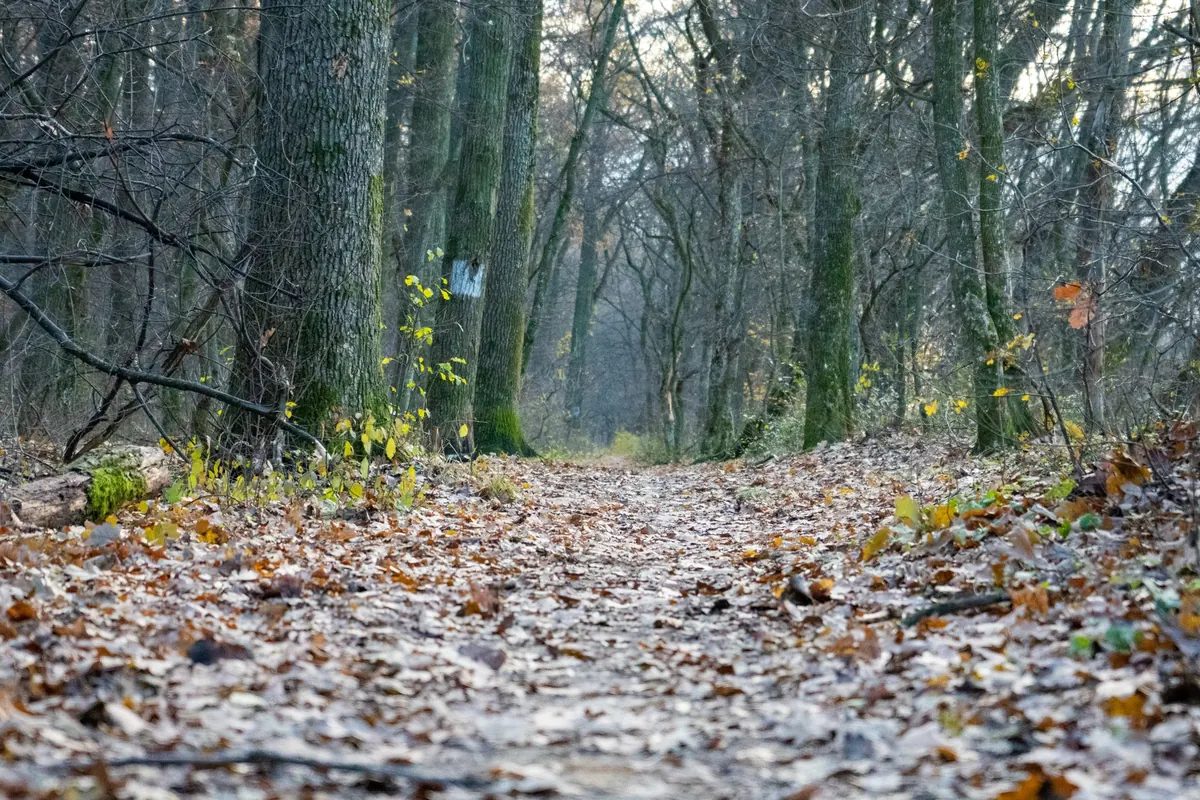
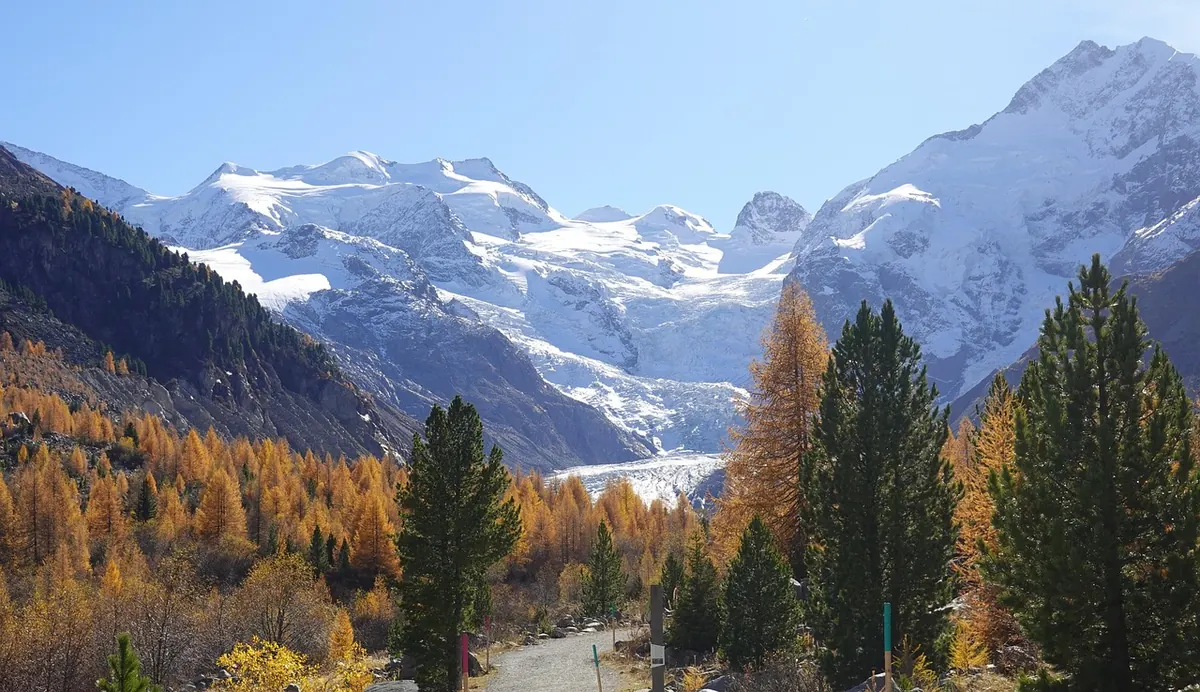
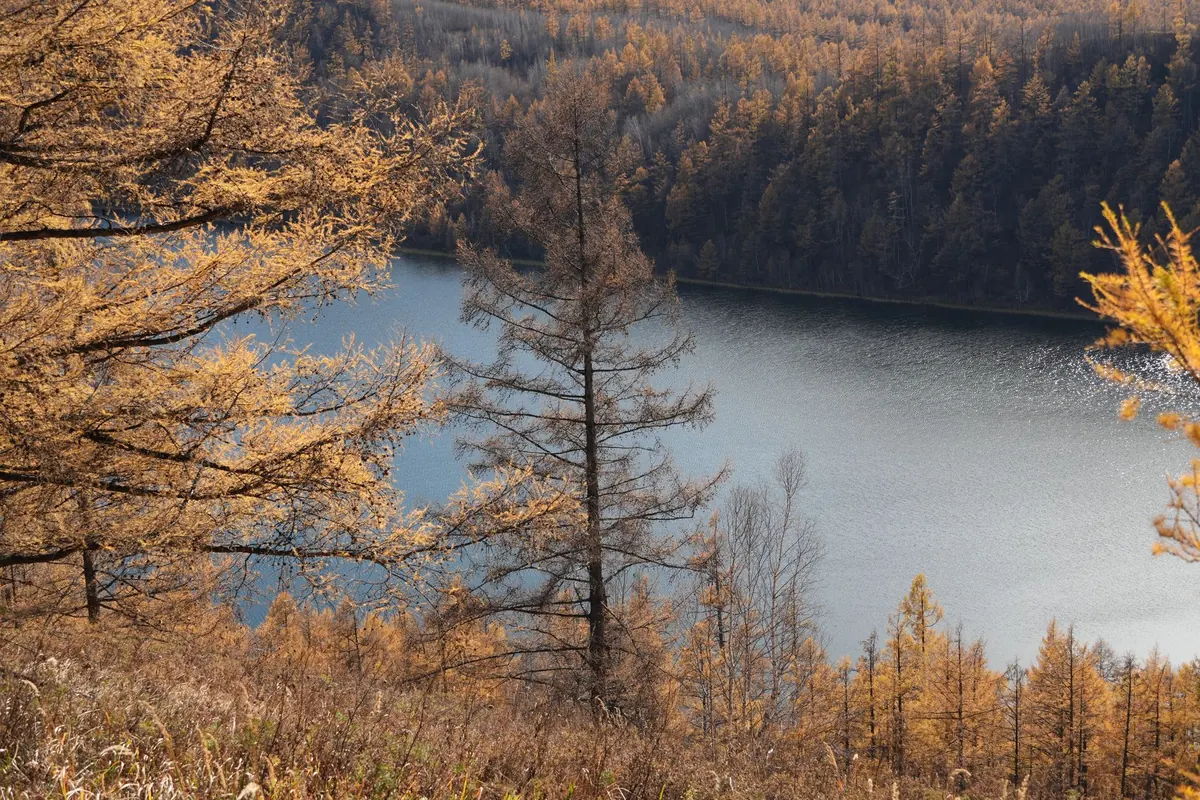
The colour change is the reward for the other eleven months. Needles move from green through yellow to a deep buttery gold from late September onwards, and then they fall. Most larches in the UK are bare by late November, though a sheltered tree in the south can hold its colour into early December. The drop is not gradual in the way of a birch: one windy night can strip a tree.
Rake the fallen needles up. They are acidic and make a decent mulch for rhododendrons, camellias, blueberries and other ericaceous plants. Under the tree itself a thin layer does no harm, but a thick mat will smother small plants and can keep the ground too wet through winter.
Late October to early March is bare-root planting time — whenever the ground is neither frozen nor sodden. It is the cheapest way to establish larch in a hedge, shelterbelt or small woodland, and the trees settle faster than potted stock. Order early, because bare-root larch sells out. If a tree arrives before you are ready, heel it into a spare bed or a pot of damp compost. Before the gales arrive, check stakes and ties, and clear fallen leaves out of gullies and drains.
Winter: bare bones and structural work
From roughly December to March the tree is a skeleton, and that is genuinely useful. With no needles in the way you can judge the real shape of a shelterbelt, spot a crossing branch before it rubs, and see how much light the garden gets without it.
Carry out structural pruning on a dry, mild day rather than in a hard freeze. Remove dead, damaged and crossing branches, thin crowded growth, and shorten a leader only if the tree is outgrowing its space. As a rule, don't take more than about a quarter of the live growth in a single winter.
Protection matters now. Rabbits and deer strip bark in winter, so a spiral guard or mesh tube up to at least 60 cm will save a young tree. Voles can ring bark under mulch or a snow crust, which is another reason to keep mulch clear of the trunk. And check drainage: larch dislikes sitting wet. On heavy clay, plant on a slight mound of improved soil and make sure water can escape downhill.
A note on larch disease
Since the 2000s Phytophthora ramorum has led to extensive felling of larch in parts of the UK, particularly in the wetter west. Look for a thinning crown, dieback, heavy resin bleeding on the trunk and dark cankers beneath the bark. If you think you have found it, do not move cut timber, plants or soil off the site. Report it to the plant health authority for your part of the UK and follow their advice.
The larch year at a glance
- January–February: structural pruning on dry, mild days; plant bare-root stock; check guards, stakes and drainage.
- March–April: bud burst and first flush; plant container-grown trees; no pruning; watch for late frost.
- May–June: strong leader growth; water young trees in dry spells; deal with aphid honeydew early.
- July–August: growth slows; clear weeds and top up mulch; begin shaping from late August.
- September–October: needles turn gold; finish pruning; prepare ground for bare-root planting.
- November–December: leaf fall finishes; rake needles; plant bare-root; secure ties before the gales.
Getting the basics right
Most larch troubles trace back to site rather than care. Larch wants full sun and free-draining ground, and many species will top 20 m in time, so give it room away from boundaries, drains and foundations. Plant in the dormant season where you can, keep the ground clear of standing water for the first few winters, and leave the secateurs alone until late summer. Do those few things and the tree will hand you four distinct seasons in return — soft green, dense shade, gold, and then a clean, quiet winter outline.
Photo: Joe Chen / Pexels