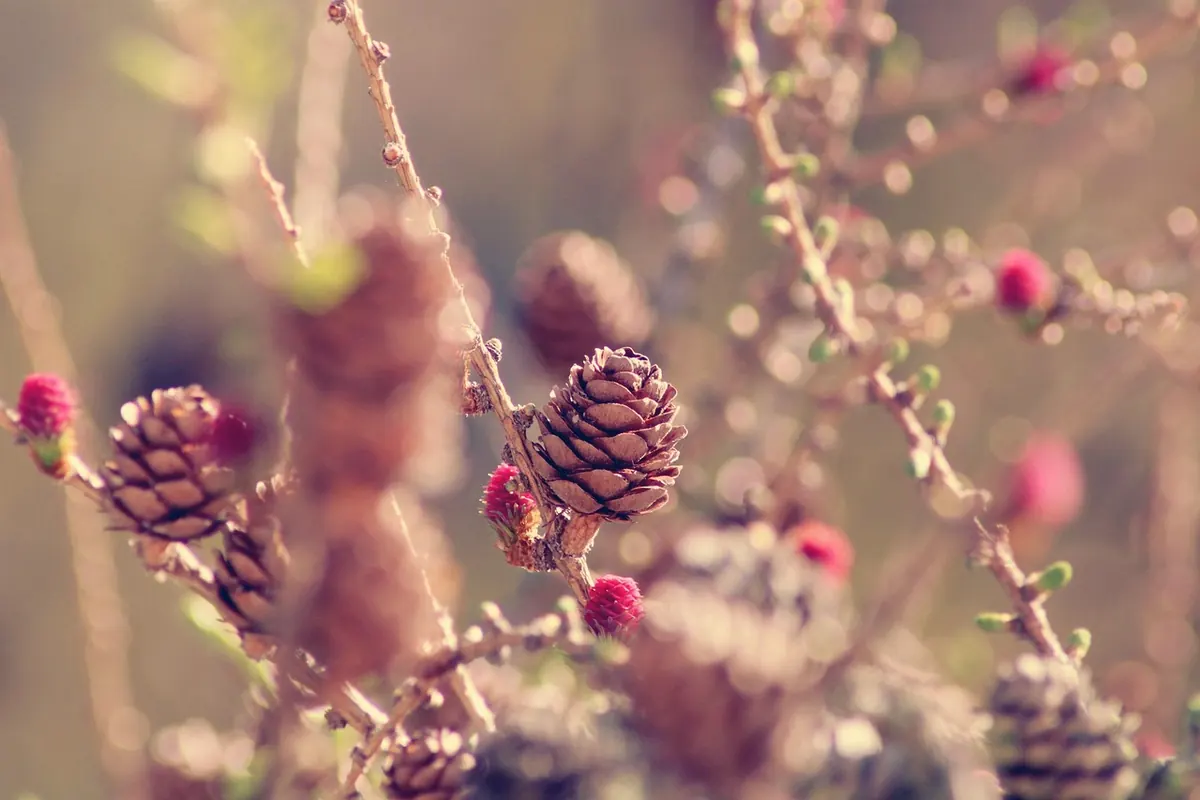
Plant a larch and you get one of the great party tricks of the tree world: a conifer that drops its needles and burns gold every October. Britain grows two of them at scale — the European larch (Larix decidua) and the Japanese larch (Larix kaempferi) — and they are similar enough to confuse a beginner and different enough to matter when you are deciding what to plant. Get the match right and you will have a fast, wind-tough, handsome tree that earns its space for decades.
The short answer
Japanese larch is the more forgiving tree: faster when young, happier on thin or sandy ground, and less troubled by larch canker. European larch is the tougher tree in the long run: more cold-hardy, better on deep loams, and steadier on exposed upland sites. If you garden in a mild lowland spot with poor, dry soil, plant Japanese. If you are at height, in a frost hollow, or on moisture-retentive ground, plant European.
Think of Japanese larch as the quick, adaptable pioneer and European larch as the long-distance marathon runner. The first gets you a screen or a show of gold sooner; the second is the one you plant for the next generation.
Growth habit and shape
Both species are strongly conical and both grow quickly for their first thirty or forty years, but they carry themselves differently.
European larch
Narrow and spire-like, with a single leader that runs away from you. The branches are irregular, often drooping at the tips, and the crown stays fairly see-through, which is why it looks so well in parkland and along a woodland edge. Young trees on good soil can add half a metre or more in a season. This is the larch of old estate plantings and shelterbelts from the Pennines northwards. In a Scottish glen or a Cumbrian valley, it often shows a lean and a wind-sculpted crown that Japanese larch rarely matches.
Japanese larch
Broader and more evenly built, with branches that sit closer to horizontal. It carries a denser set of shoots, so the crown reads fuller and, at a distance, distinctly bluer. On a good site it outgrows European larch for the first twenty years, then slows. Old trees open out and turn rather gaunt, which suits a big garden better than a small one. Its faster early growth makes it a favourite for quick screens, but that speed can also mean softer wood and a shorter useful life on exposed sites.
Autumn colour
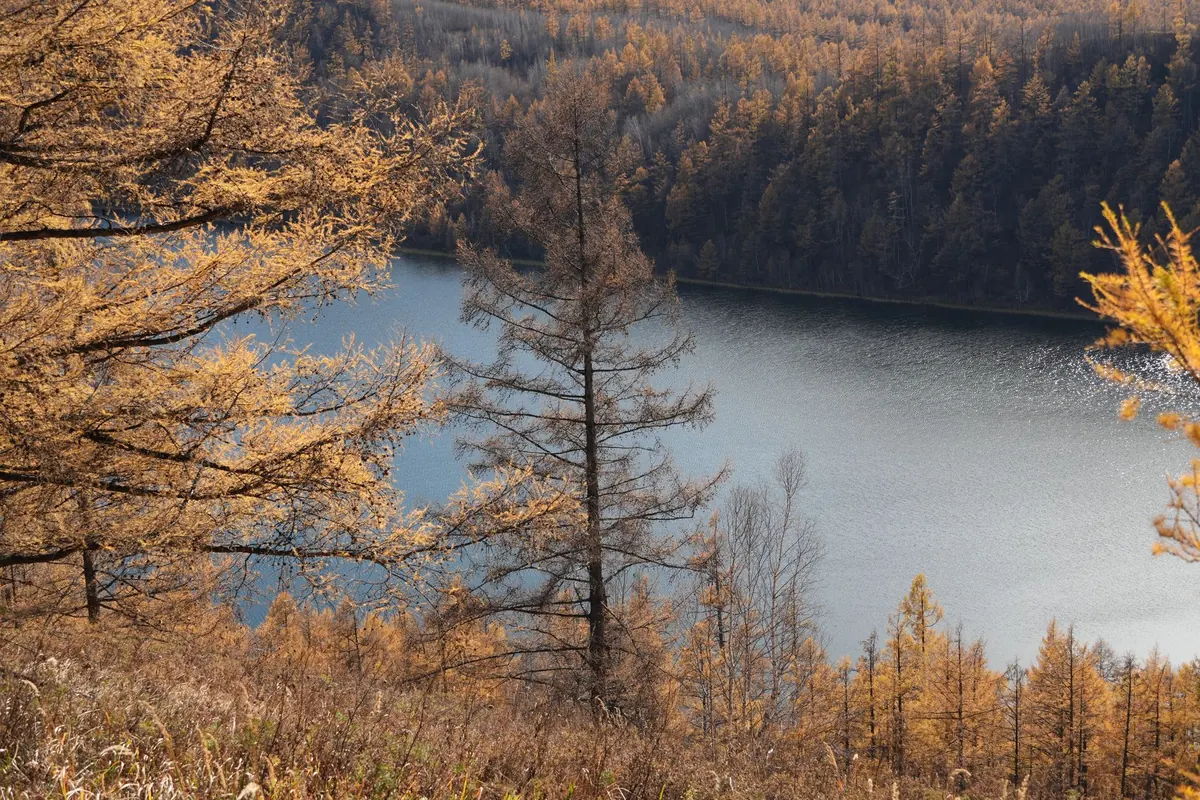
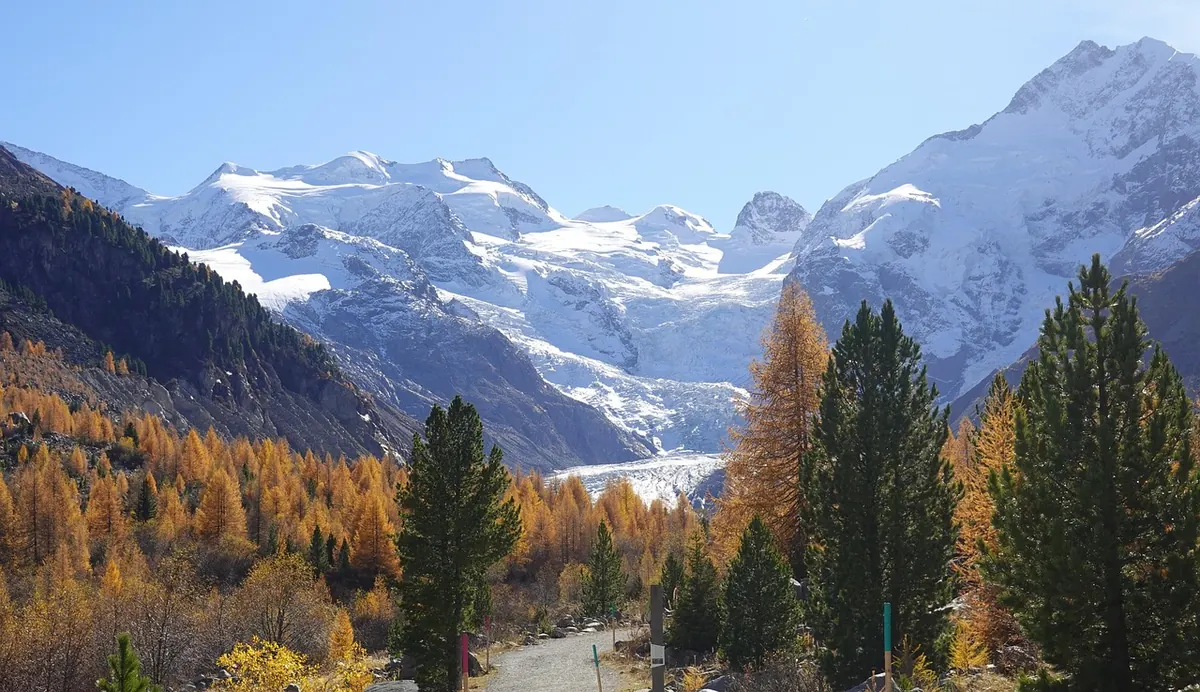
This is where the argument usually starts, and there is no single winner. European larch turns a soft, buttery yellow, sometimes with a wash of orange on the sunny side. Japanese larch goes a shade further towards gold and amber, and its colour is often more even across the tree. Both hold their needles for two or three weeks, usually from late September into late October depending on how far north you are, then shed them over a fortnight.
For the best display, plant larch where low autumn sun can reach it, and set it against something dark — a yew hedge, a stand of Scots pine, a shadowed hillside. The fallen needles rot down quietly into a fine, slightly acidic leaf mould if you sweep them into a corner. If you want the longest season of gold, plant both: Japanese larch tends to colour first in mild western gardens, while European larch often holds its needles a little later in colder districts.
Cones and other identification clues
Cone shape is the quickest way to tell the two apart, and because cones stay on the branches for years, you can check even in midwinter:
- Cones: European larch cones are egg-shaped, roughly 2.5–4cm long, with flat, close-pressed scales that feel smooth under a thumb. Japanese larch cones are smaller and rounder, 2–3cm, with scales whose wavy edges turn back — run a finger over one and it feels crimped.
- Needles: European larch is bright, grassy green. Japanese larch is blue-green with a greyish bloom, and the tufts look softer.
- Young shoots: European larch shoots are pale yellowish-brown. Japanese larch shoots are reddish-brown and often carry a chalky bloom, especially on vigorous new growth; European larch shoots lack that bloom and feel smoother.
- Bark: On mature trees, European larch bark is grey-brown and breaks into deep, rugged plates. Japanese larch bark is often darker and more scaly, with a reddish tinge in the fissures.
- Crown: European larch keeps a narrow, open, spiky outline. Japanese larch is broader and denser, with branches that seem to radiate more regularly from the trunk.
Soil, climate and exposure
Larches are not fussy about soil acidity, but they are fussy about drainage. Neither enjoys a waterlogged winter, and both prefer an open, free-draining site. Japanese larch is more at home on acid, sandy soils; European larch tolerates a wider range of loams, including some chalky soils, provided drainage is good. Beyond that, the two species part company.
European larch does best on deep, moisture-retentive but free-draining loams and loamy sands. It is the better choice for upland Britain, cold frost hollows, and sites that see late spring frosts, because it flushes a little later and hardens off reliably. It also copes with exposure better once established, which is why it has been planted for centuries in the Borders, the Pennines, and the Scottish Highlands.
Japanese larch is the pioneer for poor, dry, sandy, or gravelly ground. It will grow on acid heathland, thin upland soils, and reclaimed sites where European larch sulks. It is faster, but it is also more prone to drought stress on shallow chalk and more likely to suffer in severe exposure. In a mild lowland garden with sandy soil and plenty of summer sun, it is usually the better bet.
If your soil is thin enough to grow heather and your main problem is dry summers, choose Japanese larch. If your soil is deep enough to grow good potatoes and your main problem is frost, choose European larch.
Pests, diseases and canker
This is the section where the decision gets more serious. European larch is more prone to larch canker (Lachnellula willkommii), especially on frosty, damp sites or where branches are damaged. Japanese larch has useful resistance to that disease, which is one reason it was planted so widely in twentieth-century forestry.
But Japanese larch has a modern Achilles heel: Phytophthora ramorum. Since the late 2000s, this water mould has caused widespread dieback in Japanese larch across western Britain and Ireland, leading to felling and movement restrictions in affected areas. European larch is also susceptible, but it has generally suffered less. If you are planting in a region with a known Phytophthora problem, check current Forestry Commission or local authority advice before buying either species, and never move plant material from an infected site.
Other troubles are shared: larch casebearer moths can strip needles in bad years, aphids produce honeydew in summer, and deer or rabbits will browse young trees hard. Good weed control and a tree guard for the first few years solve more problems than any spray.
Planting, spacing and aftercare
Plant bare-root larch between November and March, whenever the ground is not frozen or waterlogged. They are best moved small: a 60–90cm whip establishes faster than a large root-balled tree and usually overtakes it within a few years.
- Specimen tree: allow at least 6–10m from buildings, boundaries, and other large trees. Larch roots are not usually invasive, but the crown needs room to develop its distinctive shape.
- Shelterbelt or woodland: plant at 2–3m spacing if you want a quick windbreak, then thin as the trees close canopy. Japanese larch is often used as a nurse crop, but do not leave it so long that it suppresses slower, longer-lived broadleaves.
- Aftercare: keep a metre-wide circle clear of grass and weeds for the first three summers, mulch with bark or compost, and water in dry spells. Stake only on very exposed sites, and check ties annually.
- Pruning: larch needs little. Remove competing leaders in winter to keep a single straight trunk, and take out dead or crossing branches if you want a cleaner specimen.
Uses in the garden and landscape
European larch is the classic parkland and avenue tree: its narrow spire and see-through crown cast a light shade that lets grass and bulbs grow beneath. It is also excellent in a mixed shelterbelt, where its bare winter branches let wind through rather than forcing it over the top.
Japanese larch is the better choice for a fast screen on poor ground, a wildlife belt, or a large informal garden where you want quick height and strong autumn colour. Both make fine specimen trees if you have the space, and both can be grown in a large container for a few years, though they soon resent root restriction.
Timber-wise, larch is prized for fencing, cladding, boat building, and outdoor joinery. European larch is generally denser and more durable; Japanese larch is faster-grown and lighter, but still useful. If you are planting for firewood or poles, either will coppice poorly but grow straight enough to produce useful small timber.Photo: Kranich17 / Pixabay