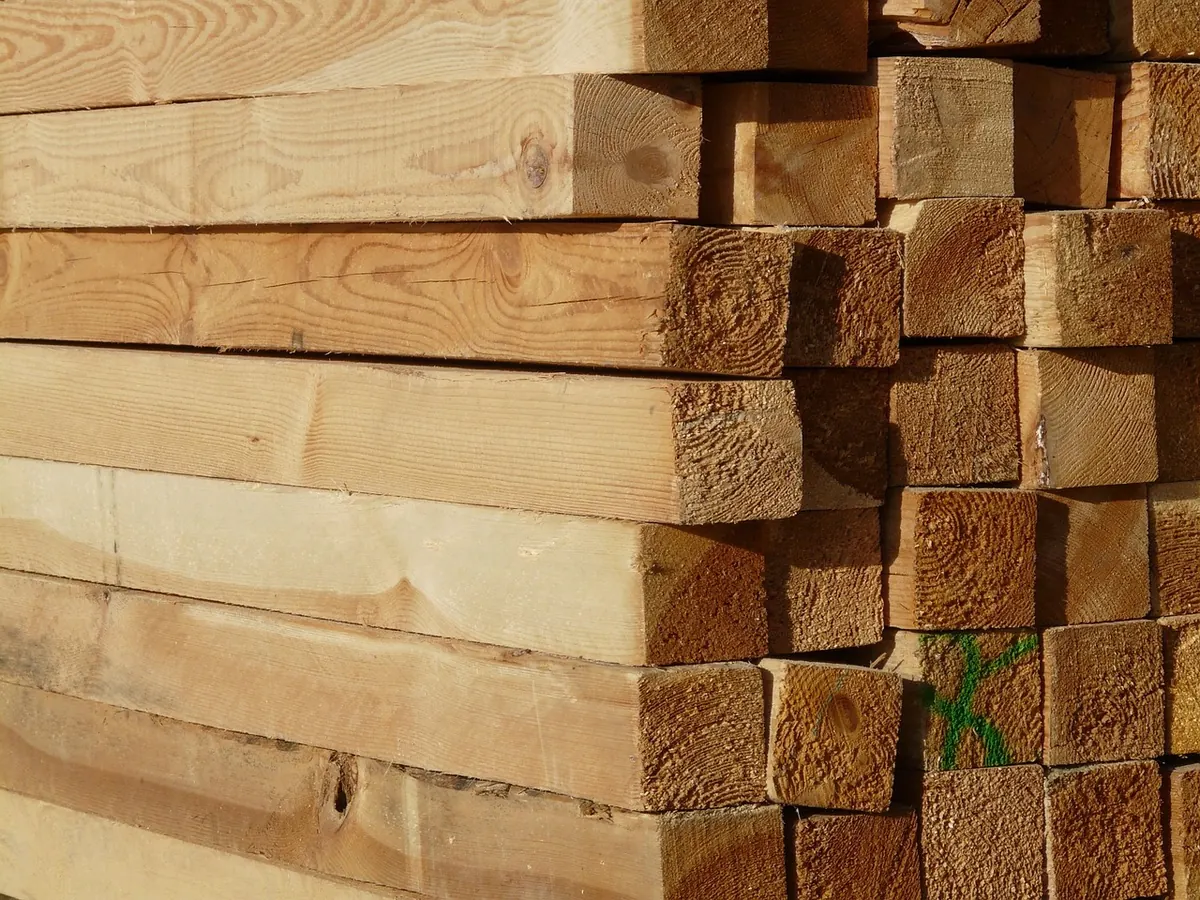
Ask five tradespeople whether larch is durable and you will get five answers, each delivered with more conviction than evidence. The truth is more useful than the argument: larch is a genuinely good outdoor timber, provided you are buying heartwood, using it in the right place and detailing it so water cannot sit on it. Set against oak and pressure-treated pine, it occupies a sensible middle ground on rot resistance, maintenance and cost. Here is how the three stack up.
What durability actually means for timber
Timber durability is not about hardness, strength, or how heavy a board feels in your hand. In the standards merchants and specifiers work to, it means one narrow thing: how well the heartwood of a species resists fungal decay and insect attack while it is wet.
That distinction catches people out. The outer sapwood of almost every tree is perishable, whatever the species on the label. A larch board that is mostly pale, sappy timber will not last like one cut from dense, resinous red heartwood. Grain direction matters, and so does how much exposed end grain you leave facing the weather.
Location does the rest. A piece of timber kept dry and ventilated will outlast a more durable species sitting in a puddle. For a fence post or a cladding board, detailing is often the deciding factor.
Larch: resinous, willing and quietly useful
Larch has a long history in British and northern European building. Its heartwood is close-grained and classed as moderately durable — a real step above pine sapwood, a step below oak. Siberian larch, slow grown in a cold climate, is denser and more heavily resinous than much of the faster-grown European material, and it is the version most often specified for cladding.
It behaves well outdoors:
- Cladding, soffits and fascia boards, left to weather to a soft silver-grey.
- Fencing, sheds and garden gates that get wet and then dry out again.
- Decking, though it is softer than oak and will mark under heavy use.
Its weaknesses are worth knowing before you buy. Larch moves noticeably across the grain, and thin boards can cup or split as they dry. Resin bleeds from knots in warm weather and will lift some paints and stains, so choose breathable, microporous finishes rather than film-forming ones. Sapwood is vulnerable, and larch is not a ground-contact timber: even good heartwood will rot if it stays wet in soil.
Oak: the benchmark, with a price tag to match
European oak is the traditional benchmark for outdoor timber in Britain and it has earned that place. Oak heartwood sits in the durable band. It is hard, dense, resistant to abrasion, and it weathers to silver without asking anything of you. For gates, sills, thresholds and any high-traffic decking, it takes some beating.
There are trade-offs. Oak is heavy and unforgiving: it blunts tools and resists screws, so pilot holes are essential. Its tannins react with iron and steel, so use stainless fixings where you can, and expect those same tannins to stain pale paving or render beneath a wet oak structure. Good oak is also the priciest of the three, and the gap between grades is wide. "Oak" on a label tells you the species, not the quality.
Treated pine: predictable, affordable, better than its reputation
Untreated pine outdoors is a poor bet — soft, sappy and quick to rot. Pressure-treated pine behaves quite differently, even though it looks similar. Preservative is forced deep into the timber, protecting the sapwood that would otherwise fail first.
The catch is that protection is only as good as the specification and the workmanship. Two rules matter:
- Match the treatment to the situation. Timber in the ground or permanently wet needs a treatment rated for ground contact. Fencing and cladding that wet and drain need less.
- Treat every cut. Sawing, notching or drilling opens untreated timber. Brush preservative onto cut ends, notches and fixing holes before assembly, and again on site.
Treated pine is cheap, widely available in consistent sizes and easy to work. It is also soft: it dents, scuffs and splits, and cheap fast-grown stock can twist badly. In ground contact it will not last like oak, but well-specified treated pine will often outlast badly detailed larch.
Head to head
- Rot resistance: oak first, larch second (heartwood only), treated pine third — unless the pine is correctly treated for ground contact and the larch is not.
- Hardness and wear: oak wins comfortably. Larch is mid-range; treated pine marks easily.
- Movement: oak and larch both move with the seasons; treated pine varies hugely with grade, and cheap stock cups and twists.
- Maintenance: oak needs least. Larch needs a decision — weather it or finish it. Treated pine needs periodic recoating and careful re-treatment of cuts.
- Cost: treated pine cheapest, oak dearest, larch between the two. Availability and grade shift the gap considerably.
- Appearance: larch has a warmer, more orange tone when new; oak and larch both silver gracefully. Treated pine needs a finish if you want it to look like anything at all.
What each one asks of you
Larch: two sensible options. Leave it bare to weather grey, accepting some checking and resin bleed, or seal it with a breathable oil or microporous stain and top it up while the finish is still sound — not after it has failed.
Oak: almost nothing. Keep ironwork away from it and watch joints where water can sit.
Treated pine: check annually. Rake out and re-treat exposed cuts, keep coatings intact, refasten anything working loose. A five-minute inspection each spring adds years.
Timber rots where water collects. Species choice buys you time; detailing is what stops the clock.
That holds for all three. Keep timber out of the soil, let air move around and behind it, slope surfaces so water runs off, and seal end grain. A ventilated cavity behind cladding, a post set on a concrete shoe rather than buried, and a small gap between boards will do more for lifespan than upgrading the species.
Choosing for your project
A short guide:
- Cladding: larch heartwood for looks and value. Oak if the budget stretches. Treated pine if it does not, provided you keep a coating on it.
- Decking: oak for heavy traffic, larch for a quieter garden, treated pine if you accept the maintenance.
- Ground contact — posts, sleepers, retaining work: treated pine rated for ground contact, or oak. Not larch.
- Gates, sills and thresholds: oak.
- Fencing and sheds: larch or treated pine, depending on budget and how long you intend to stay.
Buy heartwood, buy the right treatment for the job, and spend your attention on detailing. That combination matters more than the name on the timber. For anything structural, or where a failure could be dangerous, take advice from a qualified engineer or your local building control team before you build.
Photo: Hans / Pixabay