A larch planted this winter has one job: build a root system. Everything you admire above ground — the soft green needles, the whorled branches, the shape you chose it for — depends on what happens in the soil during the first summer. Get water, mulch and weeds right and the tree largely looks after itself. Get them wrong and you will spend the next two years watching something that never quite gets going.
What the First Year Really Asks of a Larch
Larches are undemanding trees, but they are clear about two things: they dislike roots that dry out completely, and they dislike sitting in water. A larch on free-draining loam is a happy larch. A larch in a dip of heavy clay, or one given a daily sprinkle with a watering can, is a tree in trouble.
A bare-root larch planted between November and March has the best start, because it settles into the soil while the tree is dormant. A pot-grown tree planted in spring will need more attention for longer. Either way, the first growing season is about keeping the original rootball — still small, still confined — reliably moist while the roots reach out into the surrounding soil.
Watering: Deep and Slow Beats Little and Often
Rain seldom does the job in the first year. A canopy sheds water well beyond the planting hole, and the soil around a new tree compacts quickly, so a downpour may barely reach the roots. Check before you water rather than following a rigid timetable.
Push a finger or a trowel into the soil about 10 cm out from the trunk. If it feels cool and damp, wait. If it is dry at that depth, water properly — slowly, at the base, until the soil around the rootball is soaked rather than merely damp on the surface. For a small to medium larch, that typically means somewhere in the region of 10 to 20 litres in a session. Sandy ground and windy, exposed sites dry out faster; heavy clay holds moisture longer and needs less frequent watering, but always check first.
Timing and technique
Water in the early morning or evening so less is lost to evaporation. A hose on a slow trickle, moved around the root zone, or a couple of refills of a large can, works better than a quick blast. Watering bags and soil pipes deliver moisture straight to the roots and are useful on dry sites. Skip a session after a genuinely wet week. Never rely on a lawn sprinkler — most of the water lands where the roots are not.
The waterlogging trap
If water stands in the planting hole for hours after rain, drainage is your problem, not thirst. On clay, plant on a slight mound of improved soil so the crown of the roots sits above the surrounding ground. Yellowing needles on a larch in soggy soil are a sign of wet roots, and adding more water will only make it worse.
Mulching: The Best Hour You Will Spend
A mulch ring does four jobs at once: it holds moisture in the soil, suppresses weeds, buffers root temperature and slowly feeds the tree as it breaks down. Spread it 5–8 cm deep in a ring at least 60 cm across, ideally out to the edge of the canopy. Think doughnut, not volcano — keep mulch about 10 cm clear of the trunk, because piling it against the bark traps damp and invites rot and rodent damage.
Apply in spring while the soil is damp, after a good watering, and top it up in autumn if it has thinned.
- Good options: well-rotted garden compost, composted bark, leafmould, and spent mushroom compost used in moderation.
- Avoid: fresh manure, thick layers of grass clippings that mat down and sour, and any material carrying weed seeds or perennial roots.
- Keep clear: a hand's width of bare soil around the trunk, always.
Weeding: Small and Often
Grass is the quiet thief of a young tree's first year. It draws water and nutrients from exactly the shallow layer of soil a new larch is trying to colonise, and it usually wins. Keep a weed-free circle of 60–90 cm around the trunk for the first two or three seasons.
Hand-pull or hoe on a dry day, working shallowly. Larch roots are fibrous and near the surface, so deep digging around the trunk does more harm than the weeds. Annual weeds in a mulch ring lift out easily; couch grass and bindweed need a fork and patience. Above all, keep the strimmer away. A single nick through the bark of a young tree can girdle it, and the damage often shows up as a dying crown months later.
Reading the Tree
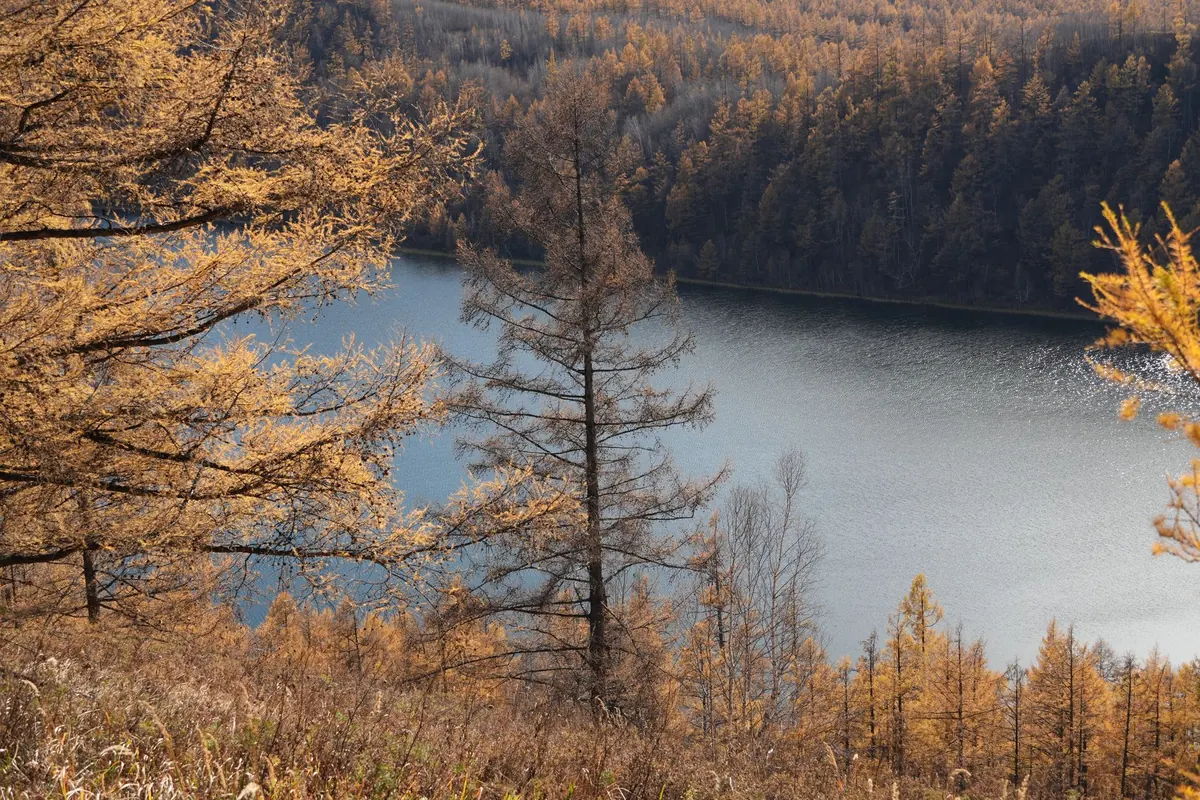
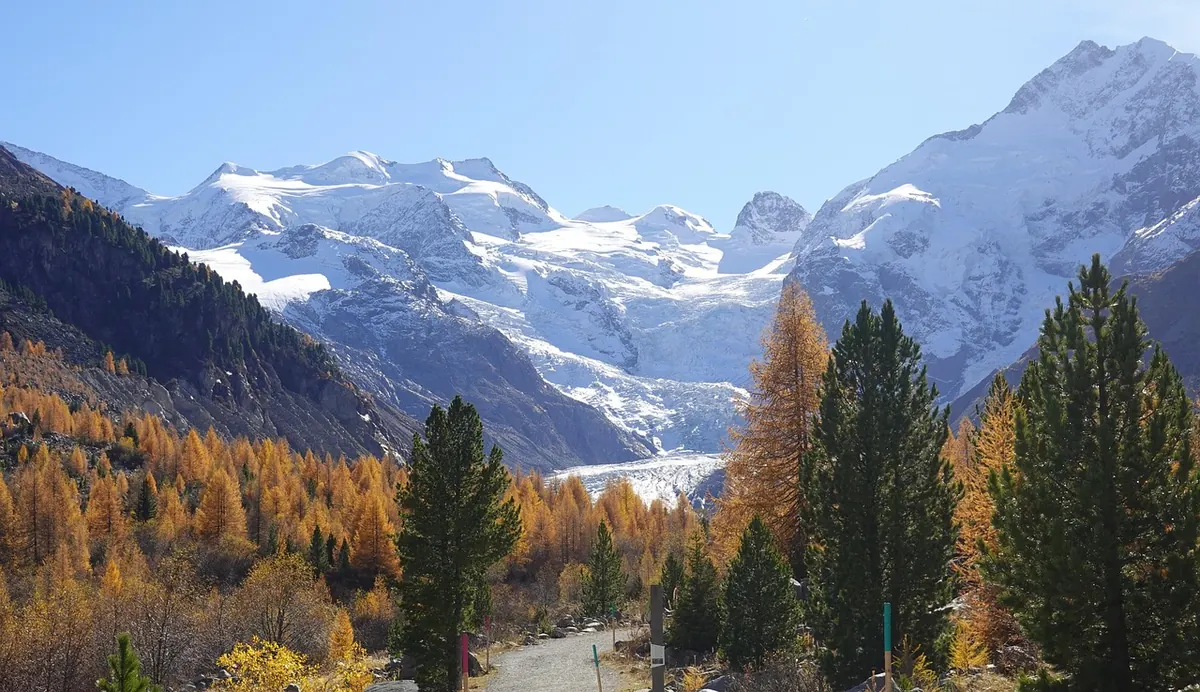
- Gold needles in autumn and bare branches in winter are normal. Larch is a deciduous conifer. It is meant to lose its needles, and a leafless larch in January is not a dead larch.
- Pale, washed-out needles in midsummer usually point to dry soil or, on clay, to waterlogged roots.
- Crisp brown tips during a dry spell are a clear call to water deeply.
- No new growth by late spring: scratch a small patch of bark on a thin twig with a fingernail. Green underneath means the shoot is alive; brown and brittle means it is not.
Feeding, Staking and Pests: What to Skip
Larches are not hungry trees, and a mulch ring supplies most of what a young one needs. On poor sandy soil, or where growth is clearly weak, a balanced general fertiliser applied in spring at the rate on the packet is plenty. Avoid high-nitrogen feeds, which push soft growth the tree does not need, and stop feeding by midsummer.
Stake only if the site is exposed. Use a short stake with a flexible tie low on the trunk, check monthly for rubbing, and remove both within two or three years so the trunk can thicken and move with the wind. Where rabbits, hares or deer are about, a spiral guard or mesh tube fitted to around 60 cm and pressed into the ground will save the bark. Voles sometimes nibble under mulch in winter — another good reason to keep the ring clear of the trunk.
A Simple First-Year Routine
- Straight after planting: water thoroughly, firm the soil gently, fit the mulch ring and check any tie.
- April to September: test the soil each week at 10 cm and water deeply whenever it is dry.
- Monthly: hand-weed the circle, check the guard and tie, and look at the needles.
- Late spring: top the mulch back up to 5–8 cm, still keeping it off the trunk.
- Autumn: one last deep watering if the season is dry, then let the tree harden off for winter.
- Late winter: check bark colour on a few twigs, and resist the urge to feed.
Most first-year larches are lost to kindness rather than neglect — too much water on heavy ground, mulch heaped against the bark, or a strimmer too close to the trunk. Water deeply when the soil tells you to, keep the ring mulched and weed-free, and let the tree get on with it.
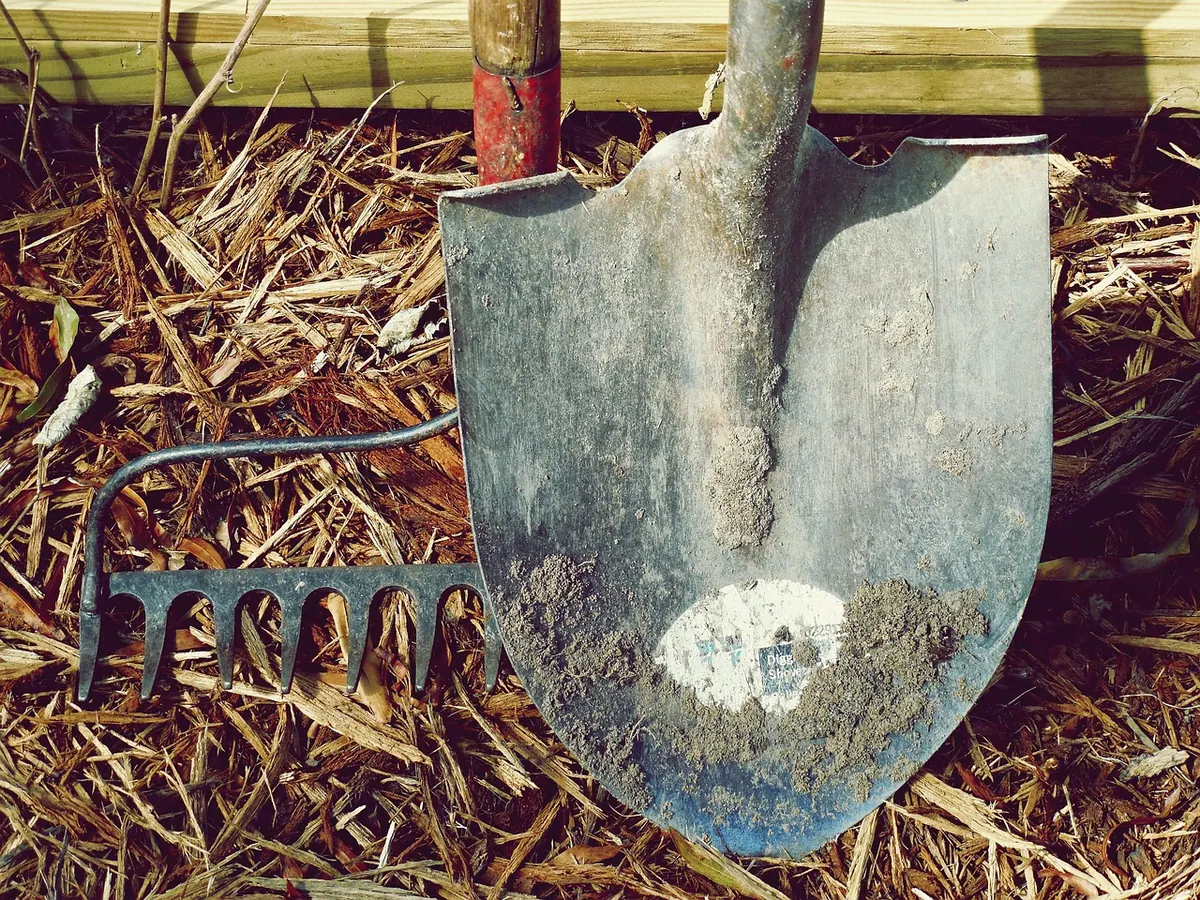
Photo: Pexels / Pixabay